⚜️ Flood Insurance in South Louisiana: NFIP vs. Private Flood Insurance ⚜️IntroductionIf you've spent any time buying, selling, or owning a home in South Louisiana, you've probably heard the
Dated: May 30 2026
Views: 62
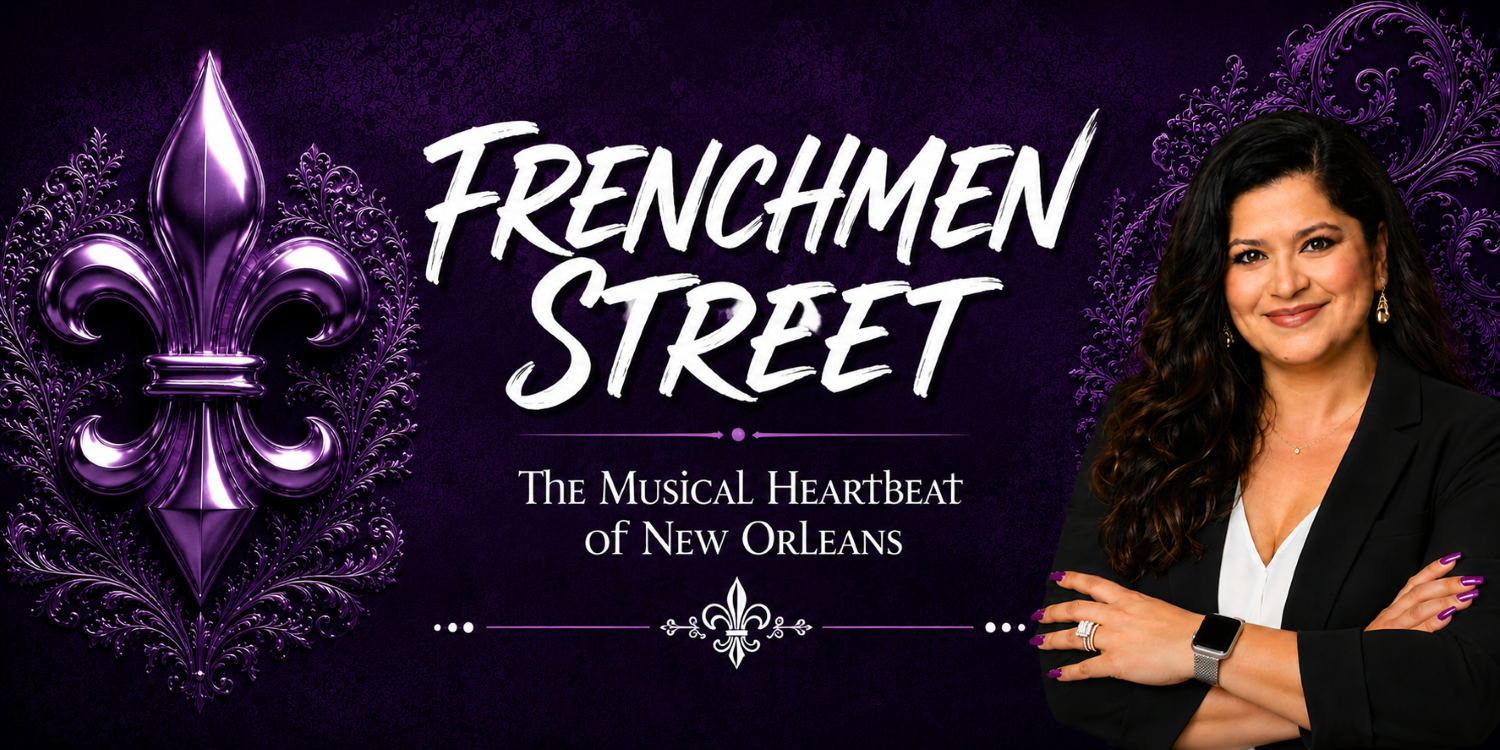
When people think about New Orleans nightlife, Bourbon Street is often the first place that comes to mind.
But ask many locals where they would send someone looking for authentic New Orleans music, and you'll often hear a different answer.
Frenchmen Street.
Located just beyond the French Quarter in the historic Faubourg Marigny neighborhood, Frenchmen Street has become one of the most celebrated live music destinations in the world.
And honestly, if Royal Street feels like the artistic soul of New Orleans, Frenchmen Street feels like its musical heartbeat.
This is where jazz spills from open doorways.
Where brass bands perform beneath glowing streetlights.
Where visitors and locals dance together on sidewalks.
And where some of the most talented musicians in the city perform every single night.
Frenchmen Street isn't simply a place to visit.
It's something you experience.
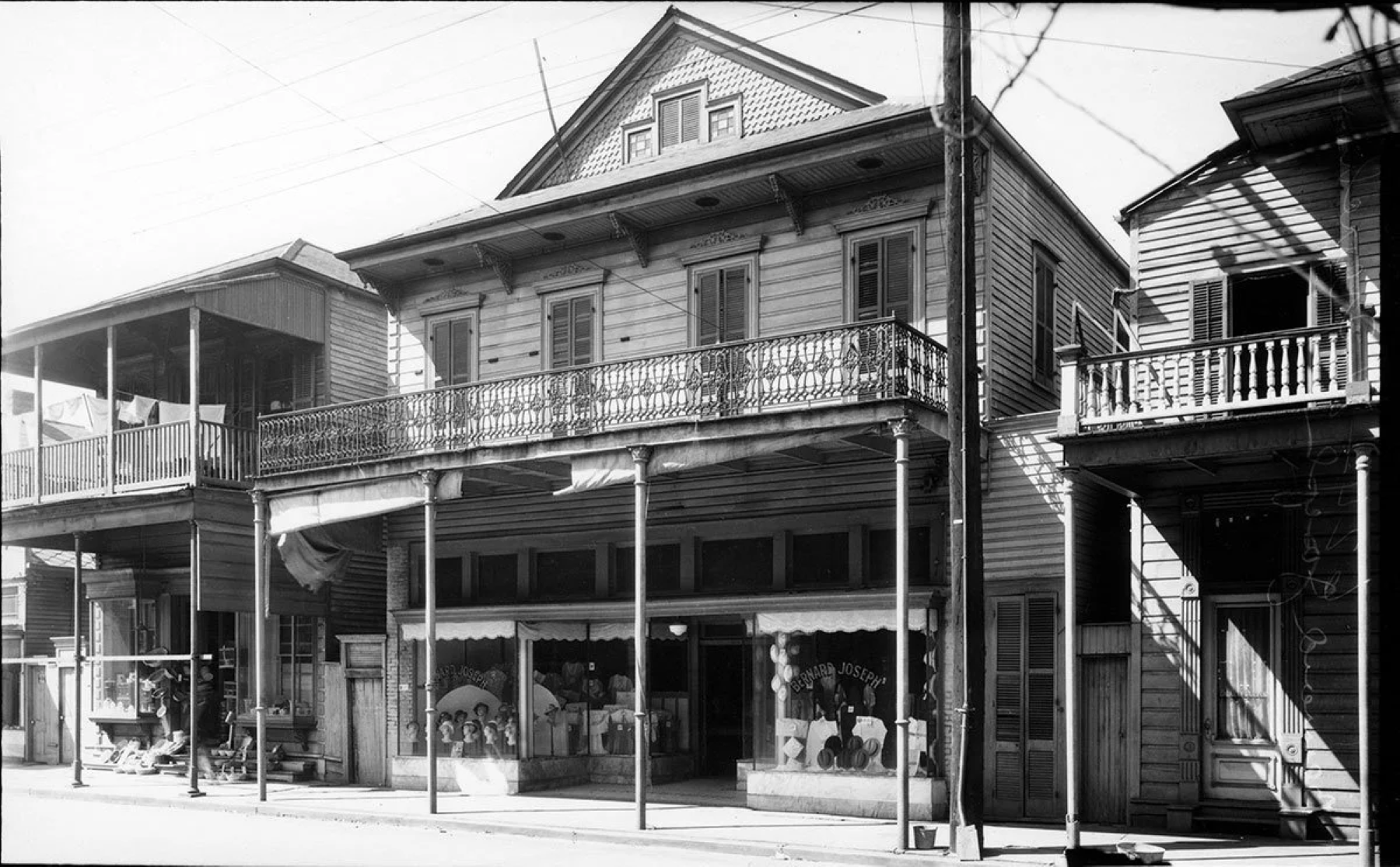
Frenchmen Street has roots that stretch back to the earliest days of Louisiana history.
Its name honors a group of French colonists who lost their lives after resisting Spanish control during the late 1700s.
A few decades later, Bernard de Marigny, one of New Orleans' most influential landowners, transformed his plantation into what would become the Faubourg Marigny neighborhood.
The neighborhood quickly developed its own distinct personality.
Unlike some of the grand avenues found elsewhere in the city, the Marigny became a vibrant mix of cultures, architecture, artists, musicians, merchants, and working families.
Even today, that independent spirit can still be felt throughout the neighborhood.
The colorful cottages, historic buildings, and creative energy all help make Frenchmen Street feel different from anywhere else in New Orleans.
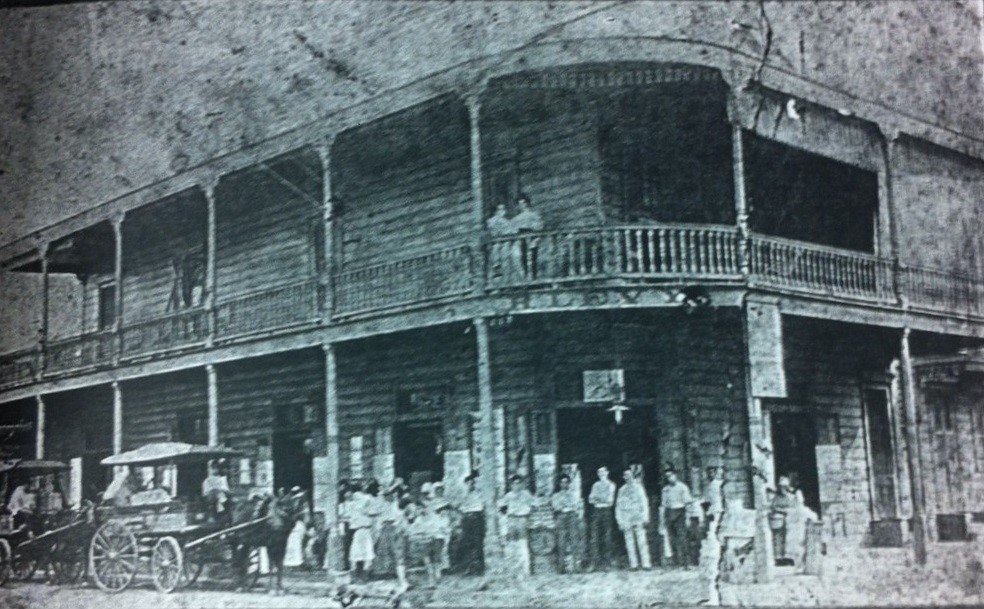
Many people are surprised to learn that Frenchmen Street wasn't always known for music.
During the late 1800s and well into the twentieth century, it served as an important commercial corridor for local residents.
Businesses lined the street, serving generations of families who lived nearby.
By the 1950s, the area was thriving.
Some locals even compared it to a smaller version of Canal Street because of its concentration of shops and neighborhood activity.
Like many urban districts across America, however, suburban growth eventually pulled businesses away from older city neighborhoods.
Over time, portions of the area began to decline.
But what happened next would completely reshape the future of Frenchmen Street.

During the 1970s and 1980s, artists and musicians began looking for affordable spaces where they could create and perform.
While other entertainment districts became increasingly commercialized, the Marigny remained relatively untouched.
Musicians found opportunity here.
Small clubs began opening.
Artists moved into the neighborhood.
Creative energy started building.
One venue in particular helped spark the transformation.
A club known as The Dream Palace opened its doors and eventually evolved into what many people now know as the Blue Nile.
Other venues soon followed.
Before long, Frenchmen Street was becoming known as a place where music came first.
Unlike entertainment districts built specifically for tourists, Frenchmen Street grew organically from the local music community itself.
And honestly, that's one of the reasons it still feels so authentic today.
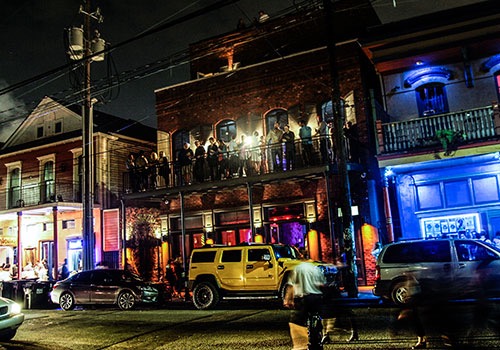
One of the most remarkable things about Frenchmen Street is that the music doesn't come from just one place.
It comes from everywhere.
As you walk down the street, you might hear a trumpet solo drifting from one club while a brass band performs down the block.
A jazz trio may be playing inside one venue while blues musicians entertain a crowd just across the street.
The sounds overlap and blend together in a way that somehow only works in New Orleans.
And honestly, there are moments when it feels like the entire street is one giant stage.
You don't have to buy a ticket.
You don't have to sit in a theater.
You simply walk.
Listen.
And let the music guide you.
It's one of those experiences that stays with people long after they leave New Orleans.

One thing surprises many first-time visitors.
When they ask locals where to hear great music, many people don't immediately recommend Bourbon Street.
They recommend Frenchmen Street.
That's because Frenchmen feels different.
The music feels more personal.
The venues feel more intimate.
The performers often feel closer to the audience.
And many people are there because they genuinely love the music.
Frenchmen Street isn't trying to be the loudest place in New Orleans.
It's trying to be the best place to hear New Orleans.
And honestly, that's exactly why so many locals continue coming back.
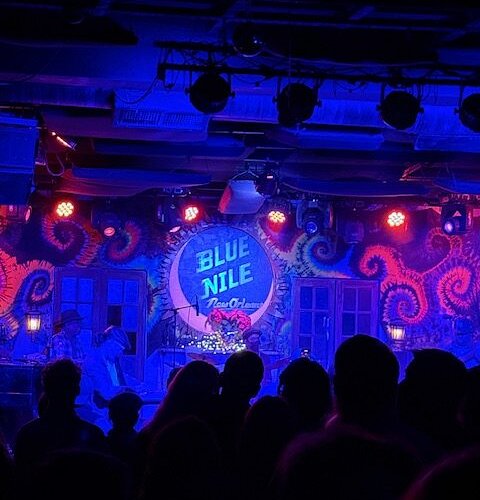
Frenchmen Street is home to some of the most respected music venues in the city.
For serious jazz lovers, Snug Harbor is almost sacred ground.
For decades, it has welcomed some of the greatest musicians New Orleans has ever produced.
The intimate listening room creates an experience where the music becomes the center of attention.
Many visitors consider it one of the finest jazz venues in America.
The Spotted Cat has become one of the most recognizable clubs on Frenchmen Street.
The atmosphere is energetic, crowded, and unforgettable.
Swing dancers fill the floor while musicians perform just feet away from the audience.
It's the kind of place where one song quickly turns into an entire evening.
Housed inside one of the oldest buildings on Frenchmen Street, the Blue Nile occupies a special place in the area's musical history.
Many local musicians who later achieved national recognition performed here early in their careers.
Today it remains one of the anchors of the Frenchmen Street music scene.
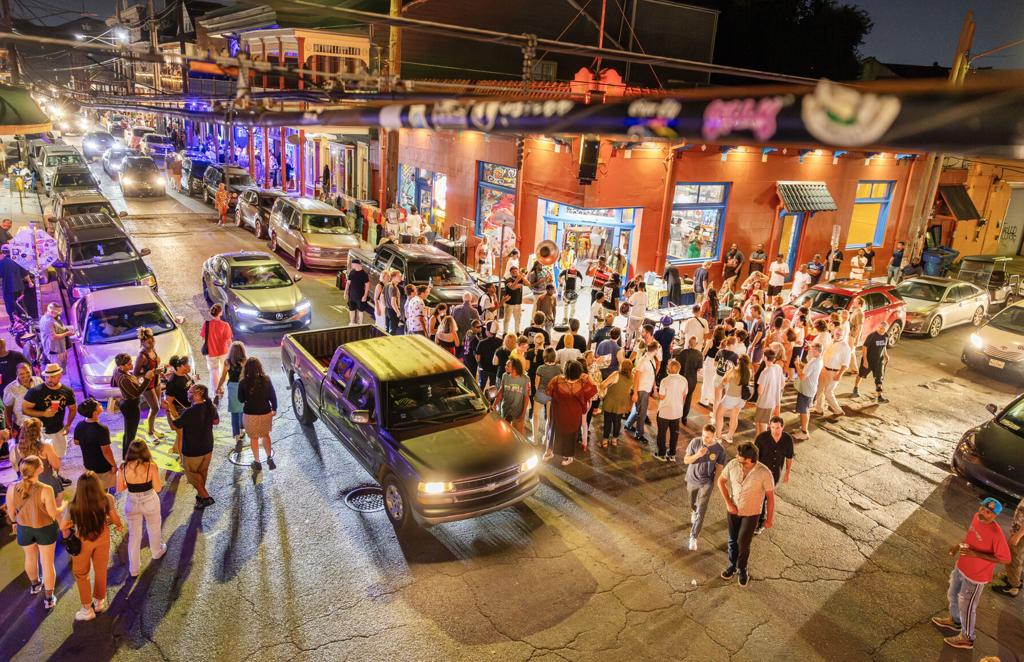
One of the funny things about Frenchmen Street is that people almost always stay longer than they planned.
You stop to hear one band.
Then another.
You wander into a club for a single set.
You browse artwork.
You grab a drink.
You hear a brass band performing outside.
Suddenly it's midnight.
And honestly, that's part of the charm.
Frenchmen Street doesn't operate on a schedule.
You simply follow the music wherever it takes you.
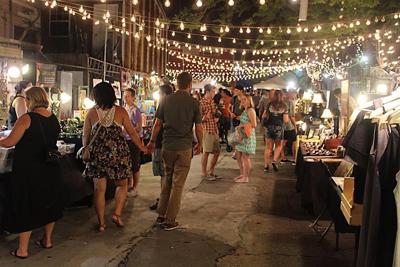
Music may be the star of the show, but it's not the only thing that makes Frenchmen Street special.
The Frenchmen Art Market showcases local artists and craftspeople offering everything from paintings and photography to jewelry and handmade gifts.
The atmosphere feels relaxed and welcoming.
String lights glow overhead while musicians perform nearby and visitors browse unique pieces created by local talent.
It's one of the best places in New Orleans to support artists while taking home something truly original.
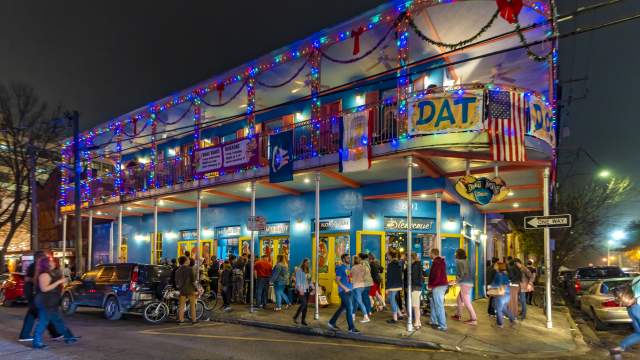
As the sun sets, Frenchmen Street transforms.
The lights begin to glow.
Music pours from open doorways.
Crowds fill the sidewalks.
Artists display their work beneath string lights.
Street performers gather beneath historic buildings.
The entire area feels alive.
Walking down Frenchmen Street at night doesn't feel like visiting a street.
It feels like stepping directly into the soundtrack of New Orleans.
And honestly, it's one of my favorite nighttime experiences in the city.

It's one of the best music streets in the world.
For generations, New Orleans has been known as the birthplace of jazz, and nowhere captures that spirit quite like Frenchmen Street.
From historic music venues and street performers to local artists and late-night crowds dancing beneath the lights, Frenchmen Street represents the creative energy that continues to define New Orleans today.
And honestly, if someone asked me where they could truly experience the sound of New Orleans, Frenchmen Street would be near the top of my list.
Because long after the evening ends, the music has a way of staying with you. ⚜️
Is Frenchmen Street better than Bourbon Street?
They offer very different experiences. Bourbon Street is known for nightlife and crowds, while Frenchmen Street is known for live music, local culture, and a more authentic New Orleans atmosphere.
You'll hear jazz, brass bands, blues, funk, swing, soul, and many other styles throughout the evening.
During daytime and early evening hours, many families enjoy visiting Frenchmen Street, especially the art market and outdoor performances.
Frenchmen Street is located in the historic Faubourg Marigny neighborhood just outside the French Quarter.
Yes. One of the reasons Frenchmen Street is so popular is the incredible consistency of its live music scene.
#PatriciasellsNOLA #REMAXAlliance #abovethecrowd #FrenchmenStreet #NewOrleansMusic #Jazz #FaubourgMarigny #NewOrleansHistory #NOLALifestyle

With over a decade of experience in the real estate industry, Patricia Conaghan is your trusted partner in navigating the vibrant and diverse markets of Greater New Orleans. Recognized as a Top 500 Me....
⚜️ Flood Insurance in South Louisiana: NFIP vs. Private Flood Insurance ⚜️IntroductionIf you've spent any time buying, selling, or owning a home in South Louisiana, you've probably heard the
📥 Tip: To print this checklist, click Ctrl+P (Windows) or Command+P (Mac) and print this page. You can also save it as a PDF for future hurricane seasons. Or right-click on the flyer
⚜️ Hurricane Preparation in South Louisiana: A Step-by-Step Timeline Before the Storm Arrives ⚜️IntroductionLiving in South Louisiana comes with many advantages: incredible food, unique
⚜️ Is Today's Housing Market Like the 1980s? Here's My Take as a Louisiana Realtor ⚜️IntroductionOne of the questions I hear from both buyers and sellers is:"Have we ever seen a housing
 The multiple listing information is provided by the Greater Baton Rouge Association of REALTORS®, Inc. multiple listing service from a copyrighted compilation of listings. The compilation of listings and each individual listing are ©2026 MLS. All Rights Reserved. The information provided is for clients' personal, non-commercial use and may not be used for any purpose other than to identify prospective properties clients may be interested in purchasing. All properties are subject to prior sale
or withdrawal.
Show More...
The multiple listing information is provided by the Greater Baton Rouge Association of REALTORS®, Inc. multiple listing service from a copyrighted compilation of listings. The compilation of listings and each individual listing are ©2026 MLS. All Rights Reserved. The information provided is for clients' personal, non-commercial use and may not be used for any purpose other than to identify prospective properties clients may be interested in purchasing. All properties are subject to prior sale
or withdrawal.
Show More...
 Copyright © 2026 New Orleans Metropolitan Association of REALTORS®, Inc. All Rights Reserved. The sharing of MLS database, or any portion thereof, with any unauthorized third party is strictly prohibited. Information contained on this site is believed to be reliable; yet, users of this web site are responsible for checking the accuracy, completeness, currency, or suitability of all information. Neither the New Orleans Metropolitan Association of REALTORS®, Inc. nor the Gulf South Real
Estate Information Network, Inc. makes any representation, guarantees, or warranties as to the accuracy, completeness, currency, or suitability of the information provided. They specifically disclaim any and all liability for all claims or damages that may result from providing information to be used on the web site, or the information which it contains, including any websites maintained by third parties, which may be linked to this web site. The information being provided is for the consumers personal, non-commercial use, and may not be used for any purpose other than to identify prospective properties which consumers may be interested in purchasing. The user of this site is granted permission to copy a reasonable and limited number of copies to be used in satisfying the purposes identified in the preceding sentence. Last Updated: September 27, 2026 8:09 AM UTC
Show More...
Copyright © 2026 New Orleans Metropolitan Association of REALTORS®, Inc. All Rights Reserved. The sharing of MLS database, or any portion thereof, with any unauthorized third party is strictly prohibited. Information contained on this site is believed to be reliable; yet, users of this web site are responsible for checking the accuracy, completeness, currency, or suitability of all information. Neither the New Orleans Metropolitan Association of REALTORS®, Inc. nor the Gulf South Real
Estate Information Network, Inc. makes any representation, guarantees, or warranties as to the accuracy, completeness, currency, or suitability of the information provided. They specifically disclaim any and all liability for all claims or damages that may result from providing information to be used on the web site, or the information which it contains, including any websites maintained by third parties, which may be linked to this web site. The information being provided is for the consumers personal, non-commercial use, and may not be used for any purpose other than to identify prospective properties which consumers may be interested in purchasing. The user of this site is granted permission to copy a reasonable and limited number of copies to be used in satisfying the purposes identified in the preceding sentence. Last Updated: September 27, 2026 8:09 AM UTC
Show More...
 MLS United® - All information deemed reliable but not guaranteed. All properties are subject to prior sale, change, or withdrawal. Neither listing broker(s) or information provider(s) shall be responsible for any typographical errors, misinformation, misprints and shall be held totally harmless. Listing(s) information is provided for consumer's personal, non-commercial use and may not be used for any purpose other than to identify prospective properties consumers may be interested in purchasing.
The data relating to real estate for sale on this website comes in part from the Internet Data Exchange program of the Multiple Listing Service. Real estate listings held by brokerage firms other than REMAX Alliance may be marked with the Internet Data Exchange logo and detailed information about those properties will include the name of the listing broker(s) when required by the MLS. Copyright ©2026 All rights reserved.
Last Updated: September 27, 2026 7:54 AM UTC
Show More...
MLS United® - All information deemed reliable but not guaranteed. All properties are subject to prior sale, change, or withdrawal. Neither listing broker(s) or information provider(s) shall be responsible for any typographical errors, misinformation, misprints and shall be held totally harmless. Listing(s) information is provided for consumer's personal, non-commercial use and may not be used for any purpose other than to identify prospective properties consumers may be interested in purchasing.
The data relating to real estate for sale on this website comes in part from the Internet Data Exchange program of the Multiple Listing Service. Real estate listings held by brokerage firms other than REMAX Alliance may be marked with the Internet Data Exchange logo and detailed information about those properties will include the name of the listing broker(s) when required by the MLS. Copyright ©2026 All rights reserved.
Last Updated: September 27, 2026 7:54 AM UTC
Show More...
